When the night breaks
13 September 2026 · 5 min read
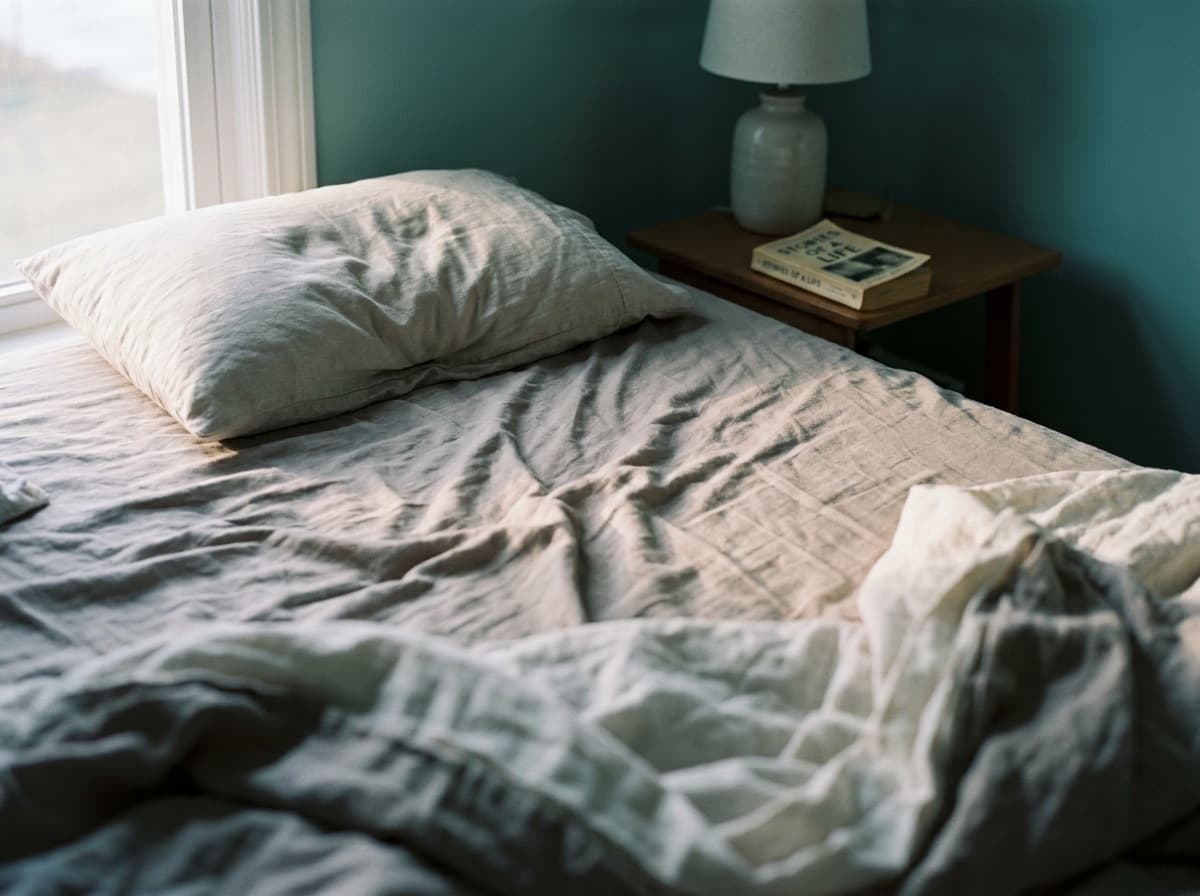
Ten to two in the morning.
You wake, and the old reflexes get there first. Eyes fully open. You reach for the clock and do the sum without meaning to: four and a half hours left. You pick up your phone — "just to check one thing" — and the screen washes your face in light for twenty minutes. You put it down. You turn over. The head starts up: Thursday's meeting, yesterday's conversation, the familiar loop. You fight for a while, fume for a while, give up for a while. At some point, out of sheer exhaustion, sleep comes back on its own. An hour has gone. Maybe more.
Ten past four. Awake again.
But this time something is different. You don't open your eyes fully. You don't reach for the clock. You don't do the sum. You let the breath out — long, slow — and take a kinder route.
The difference between those two wakings is what this article is about.
Waking up at 4am isn't the problem
First, a truth worth making peace with: nights will go on breaking. No method removes that — be wary of anyone who promises otherwise. Waking in the small hours is part of sleep: sleep runs in cycles, the cycles have seams, and sometimes a seam comes open.
The difference that matters isn't how often you wake. It's what happens next.
The first waking above cost an hour — not the waking itself, but everything added on top: the clock, the sum, the phone, the fight. The waking lasted a minute; the rest we build ourselves. The second was the same waking. What changed was the after.
And the after can be learnt. What follows is a rescue: a bare-minimum practice for someone half asleep who has no wish to wake up further in order to practise. ZenOfMe won't promise it works every night — but with practice your body learns the way back.
The rescue: back to sleep without waking further
Read it once by day. At night, follow the bold lines and nothing else.
Don't look at the clock. The hand goes there by itself; this is the hardest part. But the clock can only give you a number to suffer with. It's night, you're in bed, and the only thing to do before the alarm is rest. You already know that.
Not the phone either. A screen is daylight in the middle of the night — it tells your body the opposite of what you want it to hear.
Stay as you are. Don't sit up, don't switch anything on. The position you're in will do. Eyes closed, or nearly. The less you do, the less you wake the night.
Let the breath out. Long and slow. Once. Then again. A long exhale sends the body a simple signal: no need to stand guard any more. You're not starting a task; you're turning the volume down.
If the old thought turns up — something in you is wrong, tomorrow will be impossible — answer it: you're not broken; your body is just on alert. And it can learn its way back.
Go through the body, night version. Just the broad areas. Forehead. Jaw. Shoulders. Hands. Let the rest loosen in its own time. If sleep arrives here, go no further.
Then somewhere quiet. A place you know well — a shoreline where the water draws the sand away, a room where the curtain breathes. Stay there, not waiting for sleep, which is the best way to wait for it. Whatever thoughts keep talking, let them — far off.
Shorter still: no clock, no phone, breath, body, place. Under ten minutes. Some nights you won't need all of it.
And if sleep doesn't come back
Some nights you do all this, calmly and well, and sleep doesn't return. Worth saying plainly.
Rest is not only sleep. A loosened body in a dark bed, with no fight on, is resting — more than you'd think. Your job doesn't change: stay comfortable, leave the door open. Some nights sleep slips in once you've stopped expecting it. Some nights it doesn't. That's alright too.
If the bed is turning into a place of struggle, get up for a while. Low light, something dull and gentle — a warm drink, a few pages of a quiet book. Back to bed when the body asks.
And for the morning after: a broken night can be crossed. You've crossed every one so far. Don't add tomorrow's fear to tonight's bill.
What changes, over months
Nights still break now and then. What can go is the drama. With practice, waking can stop being an alarm and become an errand: ah, you again. Breath. Body. Place. And some nights go on with you in them, no fight — a little less broken, a little more your own.
This rescue is the smallest version of a fuller path, learnt by day and at your own pace: the ZenOfMe method. And if tonight you'd rather have a voice alongside you, in Meditate, open When the night is interrupted: a quiet voice for the small hours.
For now, keep the part that fits a half-asleep head:
No clock. No phone. Breath. Body. Place.
Further reading
The NHS guide to insomnia gathers simple habits for difficult nights. This rescue is a wellbeing practice, not a treatment: if broken nights keep coming for weeks and weigh on your days, speak to your GP.
A quiet letter, now and then
Only when there is something worth your time: a new practice, an idea for the difficult nights. No hurry, no promises.
We’ll email you to confirm it’s you. You can unsubscribe at any time, from any letter. More in the privacy policy.